
This article originally appeared at The Nerd: https://thenerddaily.com/joanna-nadin-author-guest-post/
‘The one duty we owe to history is to rewrite it,’ said Oscar Wilde. He was suggesting, we can deduce, that history is exactly that: a story, coloured by the biases, however unconscious, and potentially blinkered views of whoever set it down, and who was, almost certainly, male. But, if we are to take up Oscar’s baton, how roughly do we wield it without it damaging actual, valid experience, or jettisoning facts altogether? It’s a question that needles me as a writer for young people, as I wrestle with several responsibilities that come with the territory. On top of the usual concerns over suitable content for each age group, I have three, as I see it, key ones: to the story, making the stakes as high as I can as my protagonist chases their dream; to the reader, giving them a main character to invest in, and a story that satisfies; and, yes, to history.
There are, of course, writers who merrily take an eraser to the past and redraw entire tracts of time, killing off Hitler pre-1939 perhaps, or, as in the colourblind Bridgerton, suggesting that race wasn’t an issue in Regency Britain. Don’t get me wrong, I’m a massive fan of the Ton, and I am more than aware that England has never been as white as many versions of history would have it (or the far-right would like). But I have never been drawn to fantasy (which is what this is, just without the dragons) and when I write, I want my world to look a little less like a costumier’s wet dream and make at least a nod to the constraints of the day. Not least because I am aware that any repainting may, in this age, be taken as truth. As Black actor and writer Paterson Joseph has pointed out, thanks to Netflix there may now be swathes of America who think there were no enslaved people in nineteenth-century England and that society was entirely integrated.
This said, I also don’t want to alienate a teenage reader with endless depressing pages of how terrible things were – for women, or for any minoritised community. And they were terrible. Versions of truth aside, the fact is history was pretty unkind to most of us. Unless you’re a rich, white cishet male, if someone asks you if you’d rather have been born in a different century the answer really should be ‘hell, no’. And here is where my responsibility to the reader butts up against that to history. Because readers want and need a protagonist whom they can, if not see themselves in already, try on for size, and a too-accurate portrayal could very well mean a main character with none of that requisite energy and certainly few of the freedoms that might afford adventure, or powers they’d need to effect any change.
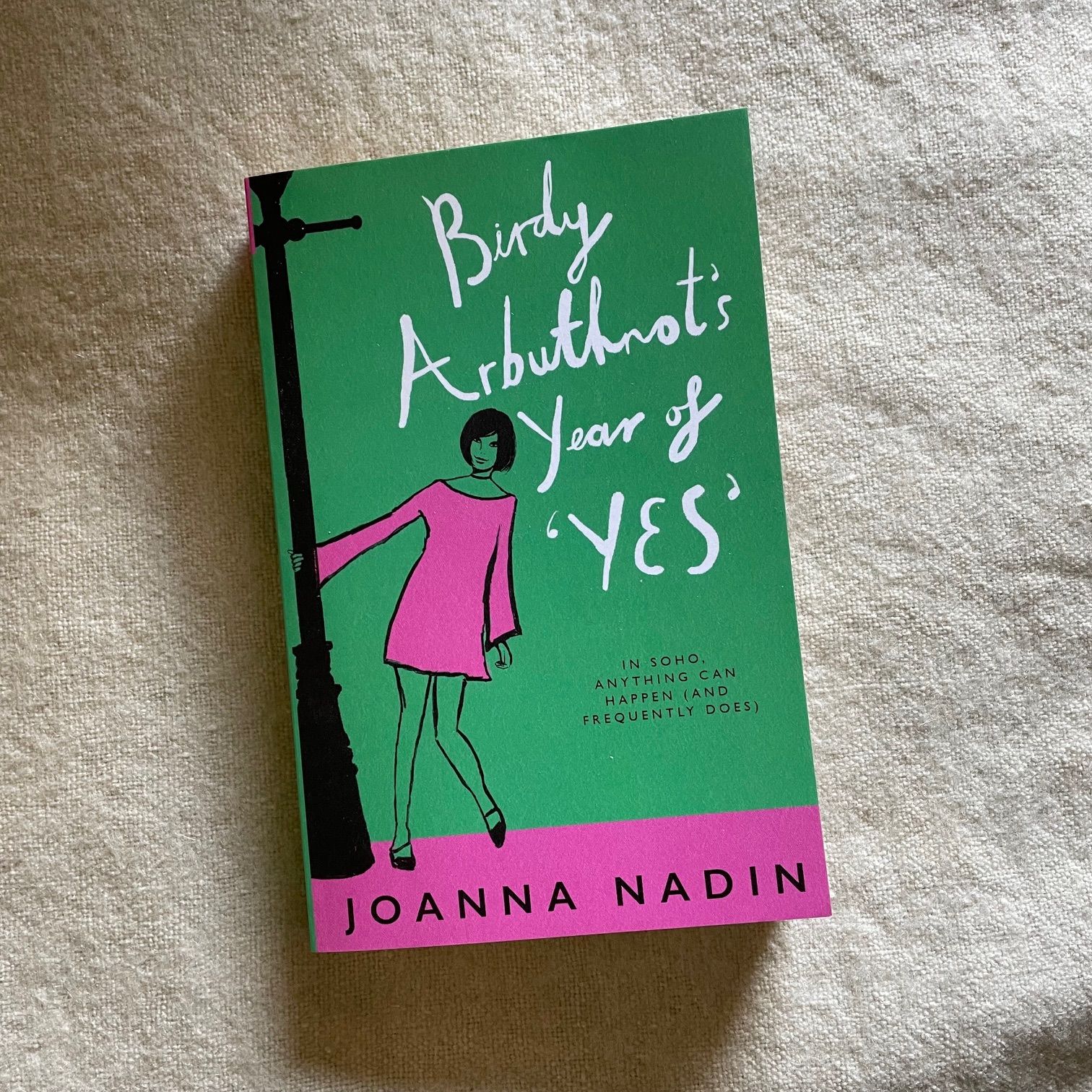
The answer is, for me, a compromise. The backdrop of society I paint as accurately as my research time and skills can manage. My latest novel, Birdy Arbuthnot’s Year of Yes, set in Surbiton and Soho in 1960, is founded on months of reading first-hand accounts of life in the ‘square mile of vice’, as well as newspaper headlines and Hansard, the record of parliamentary debates. Actual events play out on the page – the Aldermaston march against nuclear weapons, the obscenity trial and publication of Lady Chatterley’s Lover, the Commons vote on decriminalising homosexuality – clothes and hairstyles are snipped out from Vogue and Harper’s Bazaar; recipes from my mother’s old cookbooks. Then, into this world I thrust an eighteen-year-old who is, if not thoroughly modern, at least a good few decades more progressive. I use Birdy’s curious, determined and, crucially, empathetic eyes to shine a light onto hitherto hidden existences, to highlight the ubiquity of same-sex relationships, to fight a good, feminist fight for herself and others around her, even though circumstances dictate that she may not always win.
And the result? The novel is a ‘possible’ truth. A version. While some of the smaller incidents might (I hope) appear Pooterish or even Bridget Jones in their absurdity, the main thrust of the narrative – a suburban girl discovering the big city, and chasing a dream of becoming a journalist – could have happened, and that could is essential to me in anything I write or read. Because, like most readers, I want to believe I could be there, in that recognisable world, and achieve something too.
You can order a copy of Birdy Arbuthnot’s Year of Yes by clicking here.

 Joanna Nadin