Past Imperfect: Rewriting History in the Bridgerton Age

This article originally appeared at The Nerd: https://thenerddaily.com/joanna-nadin-author-guest-post/

‘The one duty we owe to history is to rewrite it,’ said Oscar Wilde. He was suggesting, we can deduce, that history is exactly that: a story, coloured by the biases, however unconscious, and potentially blinkered views of whoever set it down, and who was, almost certainly, male. But, if we are to take up Oscar’s baton, how roughly do we wield it without it damaging actual, valid experience, or jettisoning facts altogether? It’s a question that needles me as a writer for young people, as I wrestle with several responsibilities that come with the territory. On top of the usual concerns over suitable content for each age group, I have three, as I see it, key ones: to the story, making the stakes as high as I can as my protagonist chases their dream; to the reader, giving them a main character to invest in, and a story that satisfies; and, yes, to history.

There are, of course, writers who merrily take an eraser to the past and redraw entire tracts of time, killing off Hitler pre-1939 perhaps, or, as in the colourblind Bridgerton, suggesting that race wasn’t an issue in Regency Britain. Don’t get me wrong, I’m a massive fan of the Ton, and I am more than aware that England has never been as white as many versions of history would have it (or the far-right would like). But I have never been drawn to fantasy (which is what this is, just without the dragons) and when I write, I want my world to look a little less like a costumier’s wet dream and make at least a nod to the constraints of the day. Not least because I am aware that any repainting may, in this age, be taken as truth. As Black actor and writer Paterson Joseph has pointed out, thanks to Netflix there may now be swathes of America who think there were no enslaved people in nineteenth-century England and that society was entirely integrated.

This said, I also don’t want to alienate a teenage reader with endless depressing pages of how terrible things were – for women, or for any minoritised community. And they were terrible. Versions of truth aside, the fact is history was pretty unkind to most of us. Unless you’re a rich, white cishet male, if someone asks you if you’d rather have been born in a different century the answer really should be ‘hell, no’. And here is where my responsibility to the reader butts up against that to history. Because readers want and need a protagonist whom they can, if not see themselves in already, try on for size, and a too-accurate portrayal could very well mean a main character with none of that requisite energy and certainly few of the freedoms that might afford adventure, or powers they’d need to effect any change.

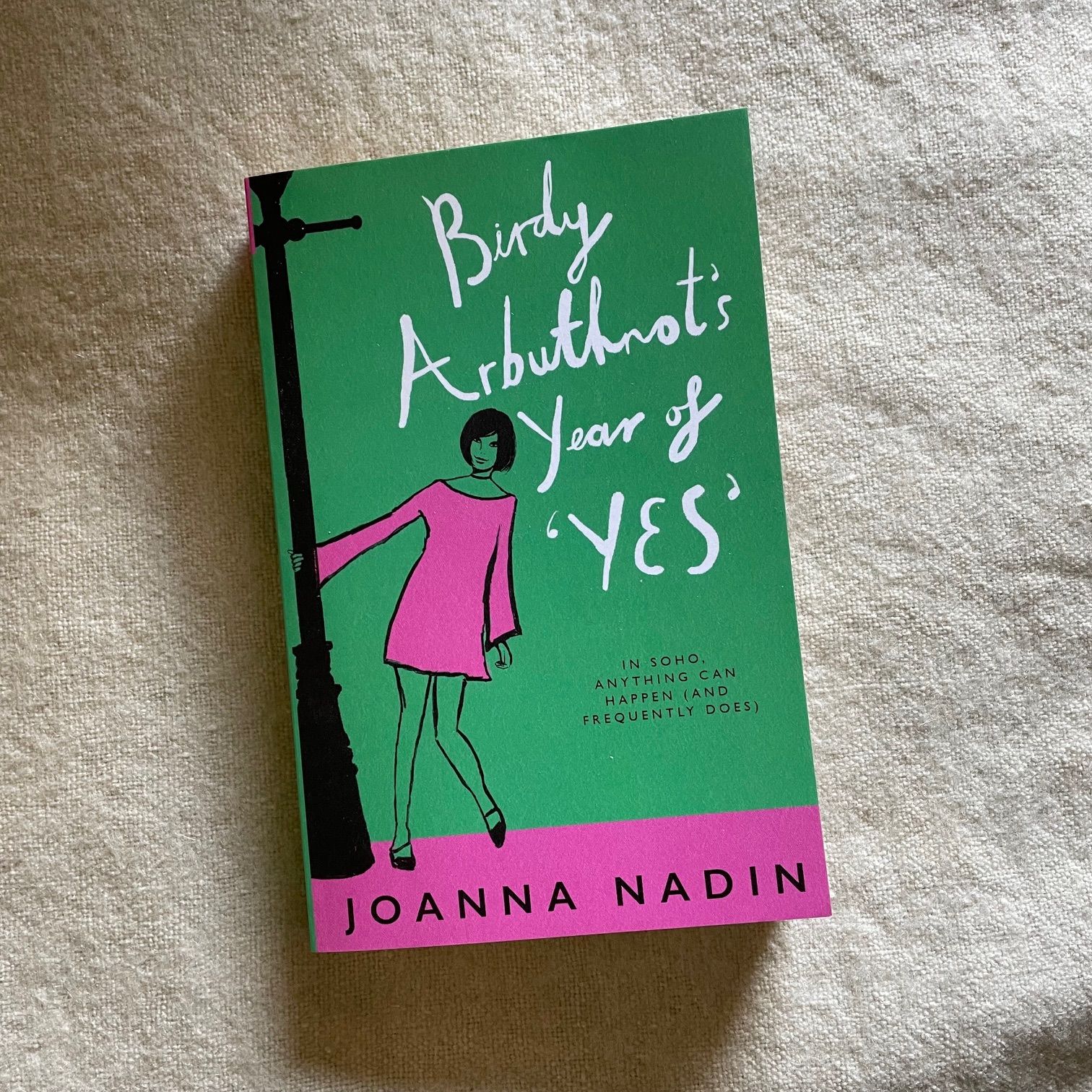
The answer is, for me, a compromise. The backdrop of society I paint as accurately as my research time and skills can manage. My latest novel, Birdy Arbuthnot’s Year of Yes, set in Surbiton and Soho in 1960, is founded on months of reading first-hand accounts of life in the ‘square mile of vice’, as well as newspaper headlines and Hansard, the record of parliamentary debates. Actual events play out on the page – the Aldermaston march against nuclear weapons, the obscenity trial and publication of Lady Chatterley’s Lover, the Commons vote on decriminalising homosexuality – clothes and hairstyles are snipped out from Vogue and Harper’s Bazaar; recipes from my mother’s old cookbooks. Then, into this world I thrust an eighteen-year-old who is, if not thoroughly modern, at least a good few decades more progressive. I use Birdy’s curious, determined and, crucially, empathetic eyes to shine a light onto hitherto hidden existences, to highlight the ubiquity of same-sex relationships, to fight a good, feminist fight for herself and others around her, even though circumstances dictate that she may not always win.

And the result? The novel is a ‘possible’ truth. A version. While some of the smaller incidents might (I hope) appear Pooterish or even Bridget Jones in their absurdity, the main thrust of the narrative – a suburban girl discovering the big city, and chasing a dream of becoming a journalist – could have happened, and that could is essential to me in anything I write or read. Because, like most readers, I want to believe I could be there, in that recognisable world, and achieve something too.

You can order a copy of Birdy Arbuthnot’s Year of Yes by clicking here.
Posted in Uncategorized | Tagged , , | Leave a comment

Autistic All Along

This article originally appeared on Culturefly


I was diagnosed as autistic in the autumn of 2024, a few years after my daughter’s diagnosis with ADHD and the GP’s suggested pursuit of an ASD diagnosis in its wake. I was 54 by this point. How had I not known? Looking back, the evidence is everywhere: in my nursery school reports that worried I would not take off my anorak (well, it was my favourite thing in the world) and sat alone in the Wendy House for hours upon end; in the school reports that complained I spent too much time ‘correcting’ other children; in my own mother’s declaration that I was a ‘strange’ child and ‘difficult to live with’. In my own long list of things I find difficult (actually impossible) to live with: hats, stray hairs, the colour teal, any other human bar my child. But perhaps one of the clearest revelations was rereading my own novels and reassessing those protagonists (or their friends or sisters) who are decidedly different, entirely based on me, and so very clearly autistic.

There is Rachel Riley who, through seven ‘diaries’ displayed every obsession I had as an adolescent, along with my literal interpretations of everything and inability to ‘fit in’. There is Jean in The Talk of Pram Town, with her rituals and rules. And, most recently, there are the Mannering sisters from A Calamity of Mannerings and Birdy Arbuthnot’s Year of Yes: cool-headed Aster, with her dislike of parties and people in general; constantly wrong-footed Panther who misreads people and fails to impress as a debutante; Marigold who collects facts about animals as well as the animals themselves. There is Birdy too, whose tangential mind is off on flights of fancy every second page, along with her rule-bound and anxious mother. These girls and women are all autistic and/or have ADHD, albeit coded and albeit accidentally.

I have questioned whether or not I might rewrite any of them, giving them an actual diagnosis, stated on the page, but the answer is always ‘unlikely’. Aside from time (and printing costs), the issue for me is that, historically, even as recently as the mid-2000s of Rachel’s adolescence and certainly in the early twentieth century of the Mannering sisters, they would not have been diagnosed. Even now, despite the acknowledgement that neurodivergence presents differently in women and girls than it does in men and boys, we are so very far behind, but in 1924? 1960? Not a chance.

Have no doubt, though, they – we – existed. In history and on the page. Rereading Austen I’m struck by the potential diagnoses one might make of the Bennet sisters. A favourite game with autistic writer friends is ‘spot the neurospicy protagonist’ when we reread old novels, or even recent ones. My greatest delight, though, is writing a third Mannerings novel knowing that I am writing an actually autistic main character (Marigold) and feeling free to make that obvious. I am free, now, to give her all my traits, and free too to have her ignore any pressure to ‘change’ or ‘be more normal’. A liberty I can only wish for, for the awkward, ill-fitting seventeen-year-old me.

You can order a copy of Birdy Arbuthnot’s Year of Yes by clicking here.
Posted in creative writing, Fiction, love, Uncategorized, YA | Tagged , , , , , , | 1 Comment

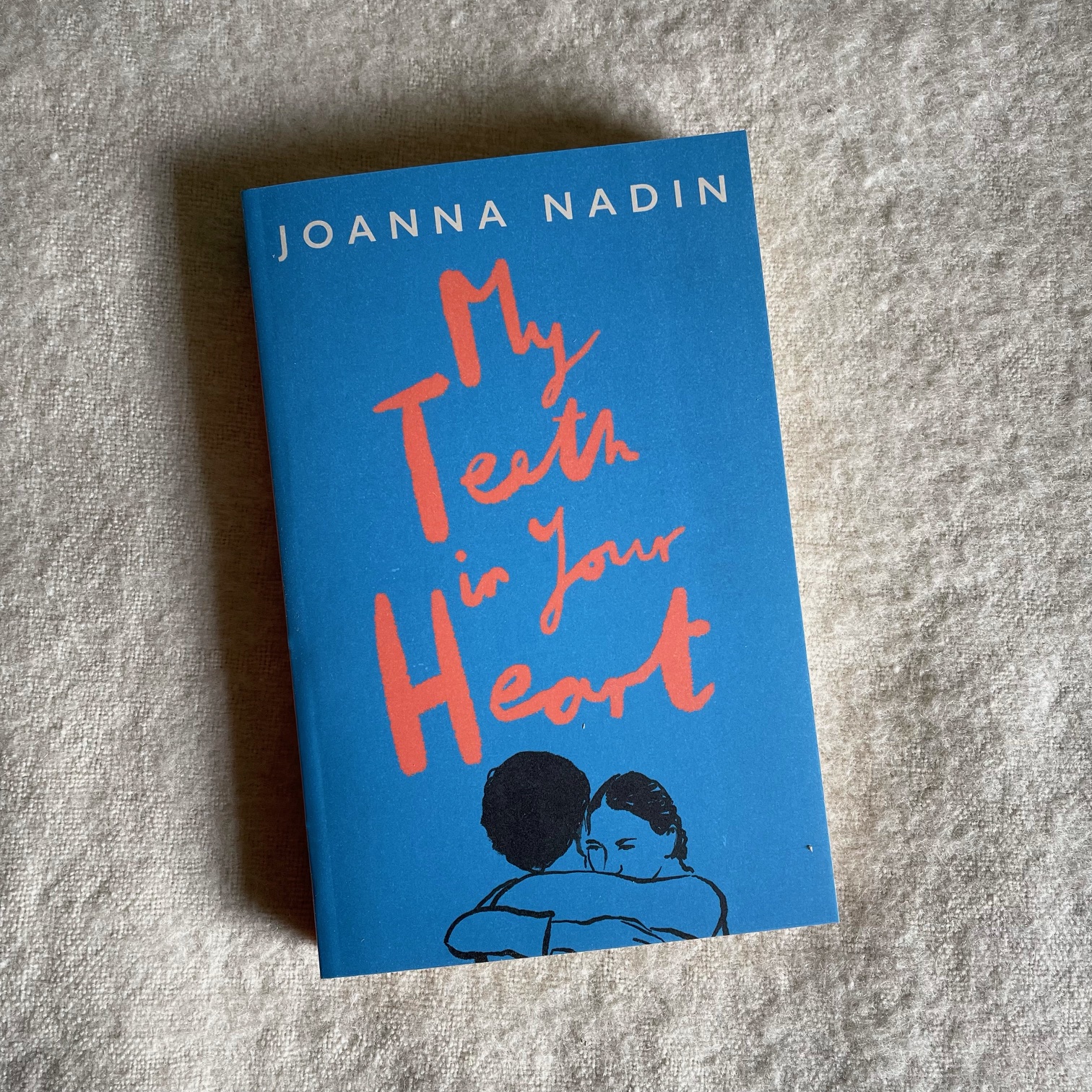
My Teeth in Your Heart

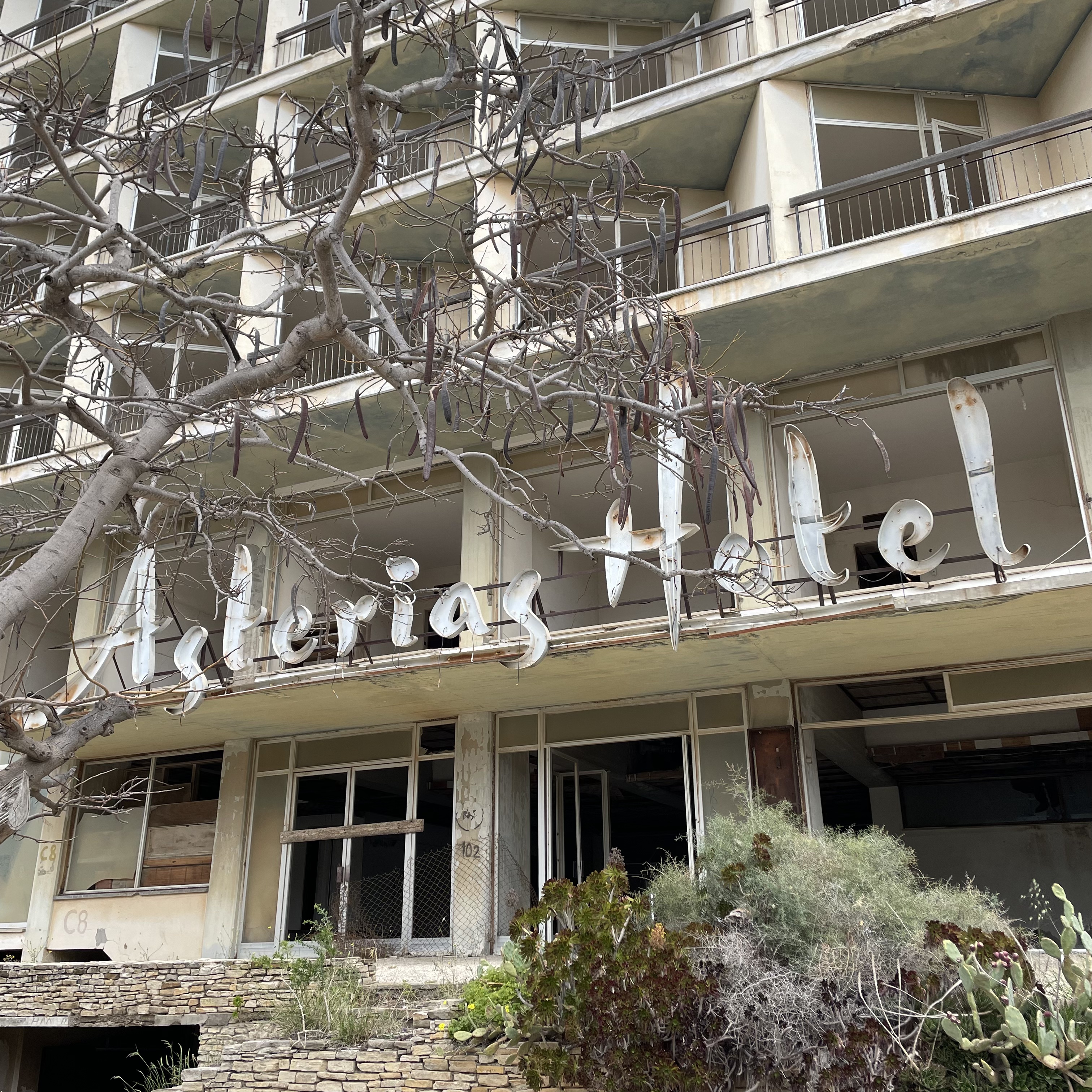
On the eastern edge of the island of Cyprus sits a string of built-up resort towns – Protaras, Paralimni, Ayia Napa – the latter famed for its night life that begins late afternoon and ends – if it ends – sometime around dawn. But a few miles to the north, if you bring the right paperwork, and can fathom the taxis that begin and end at the armed border crossing, you can venture into the jewel in Cyprus’s crown, or, at least the derelict shell of it.

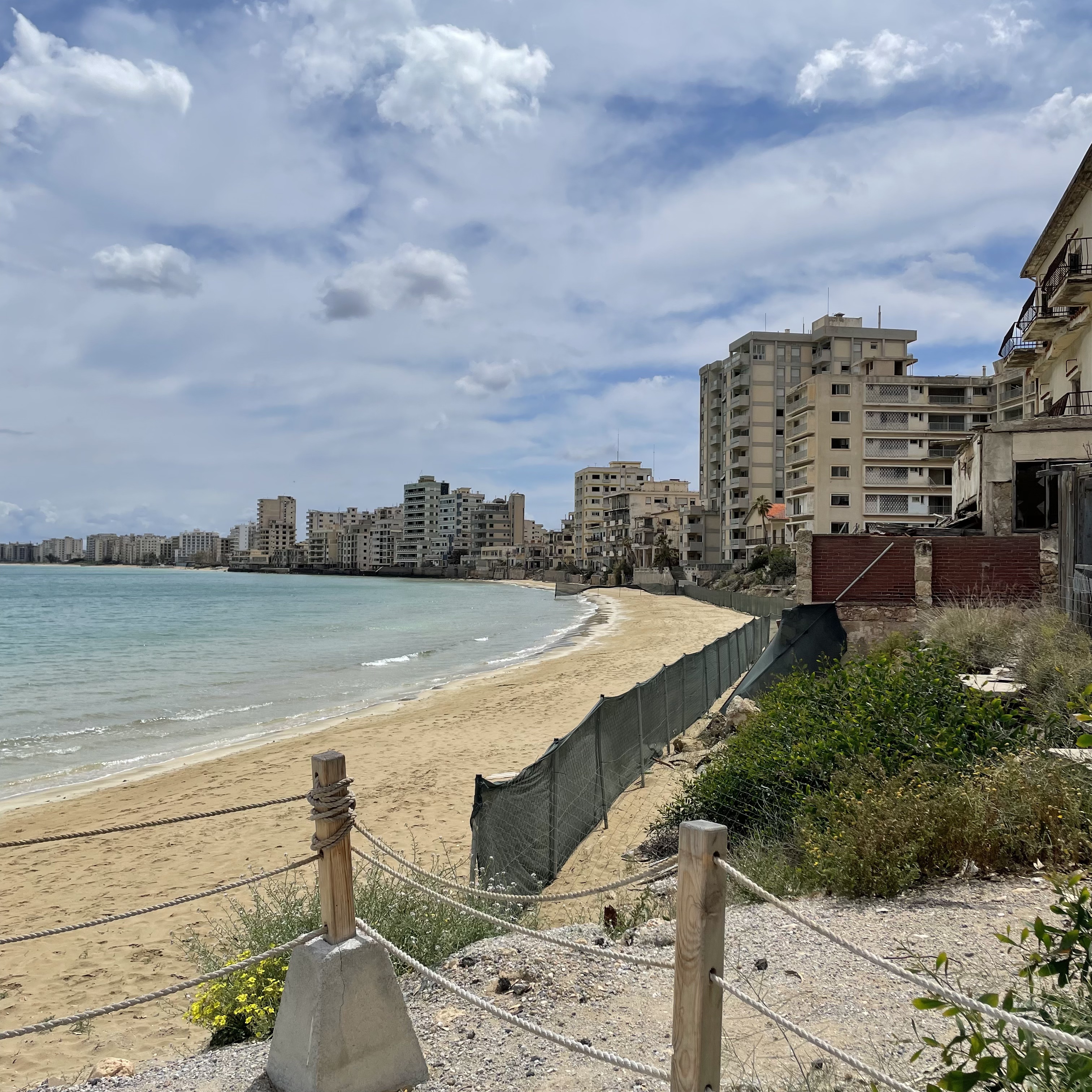
Varosha, a southern suburb of Famagusta (‘varosha’ means ‘suburb’) was once a playground for the rich and famous: Elizabeth Taylor holidayed there; Abba were formed there. Postcards from the early 1970s show a technicolour expanse of yellow sand and hoards of holidaymakers in primary-bright bathing suits reclining on loungers in front of high-rise hotels. Many of them, undoubtedly, the wives of the myriad British ex-pats – military and civilian ­– who took up what was known then as the ‘sunshine posting’. Today, though, the resort is roped off and gated, its buildings crumbling, its shops long-looted. It resembles nothing more than a ghost town, or, more accurately, a war zone, which, effectively, it still is.

By 1974, Cyprus had already had a long history of conflict, with disputes over land rights long-running between Turkish- and Greek-Cypriot inhabitants, the occupying British only adding to the tension. This tension erupted that July when Greek mainland troops in collaboration with Cypriot supporters overthrew the president, and installed Nicos Sampson, who was pro ‘enosis’ – union of Cyprus with Greece. Turkey retaliated by invading the island, airdropping troops and bombing Varosha itself. Hundreds of lives were lost that summer, and thousands more people – Greek, Turkish and British – were displaced. The conflict lasted just weeks, but its aftereffects are still being felt today as the island was cut in two, split horizontally by a buffer or ‘green’ zone. In most places this border is a few metres wide, but to the east it expands to engulf the entirety of this once-flourishing suburb. For more than four decades it remained behind towering barbed-wire fences, inhabited only by rats, birds and the UN troops that patrolled it. Then, in 2020, a few streets were opened up for a few hours a day, allowing visitors to both mourn and gawp at what Varosha had become.

Until 2022, though, Varosha to me was merely the name of a friend – a friend whom, I assumed, had had hippy parents. It was only in August of that year she explained to me its origin – that her parents had lived there; she had been conceived there, and later, as a baby, evacuated just days before the bombs began to fall. A few weeks later, on my way to meet Varosha for coffee, in what felt like fate, I took a phone call from my publisher, who said she wanted to talk about the 1974 invasion of Cyprus, specifically Varosha – where her father had grown up – because she thought there was a YA novel in it.

There was. My Teeth in Your Heart marks the 50th anniversary of the invasion, and follows two seventeen-year-old girls as they face and face up to conflict in Varosha: Anna, who falls in love with a Greek-Cypriot boy in a bookshop in 1974 and finds herself pregnant, and Billy, her granddaughter, who, upon Anna’s death in 2024 goes back to the island to trace her real grandfather and finds herself falling in love as well. It is my love letter to both Varoshas and, I hope, a small insight into the difficult history of that side of Cyprus.

Buy the book by clicking here.

Posted in 1970s, creative writing, Fiction, romance, YA | Tagged , , , , | 1 Comment

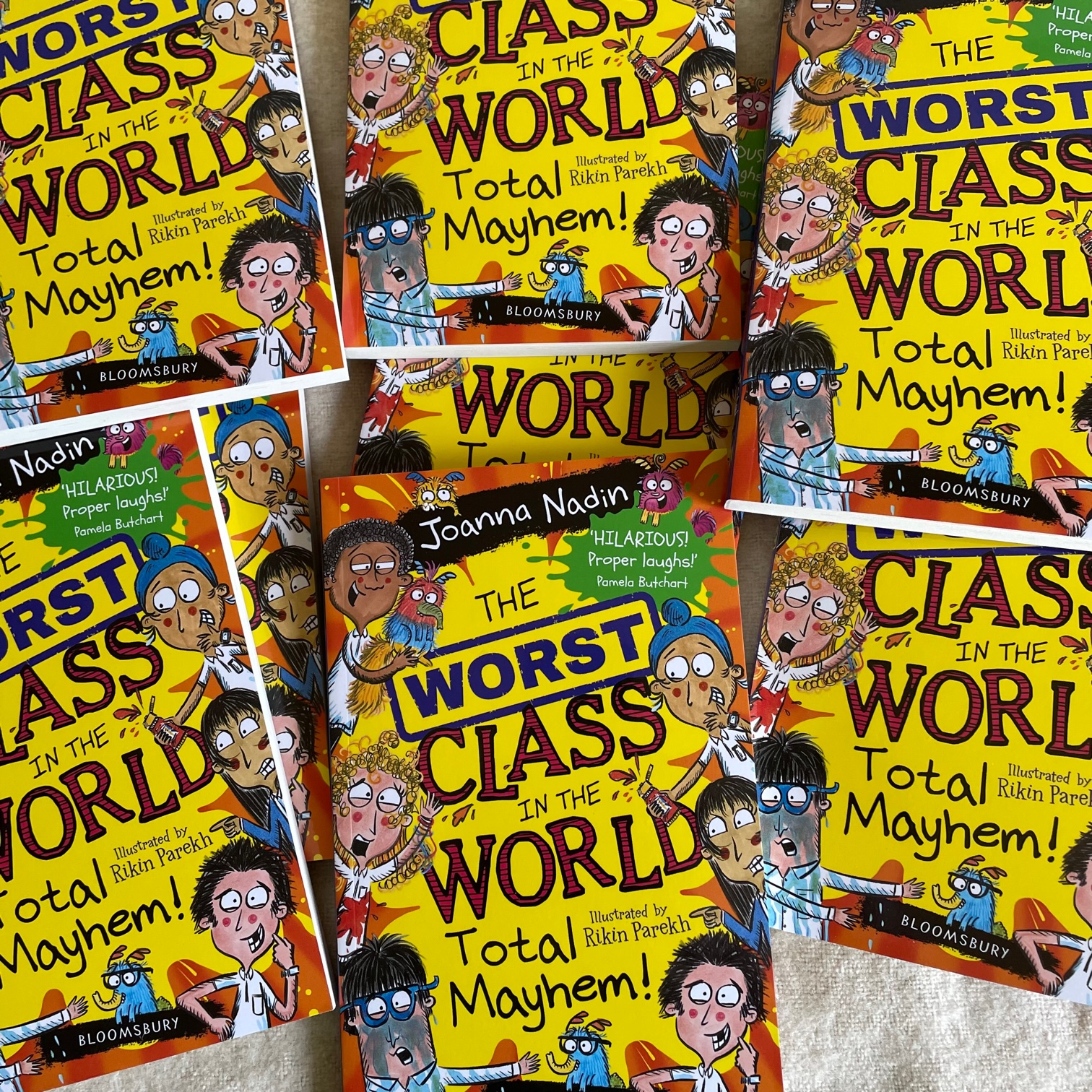
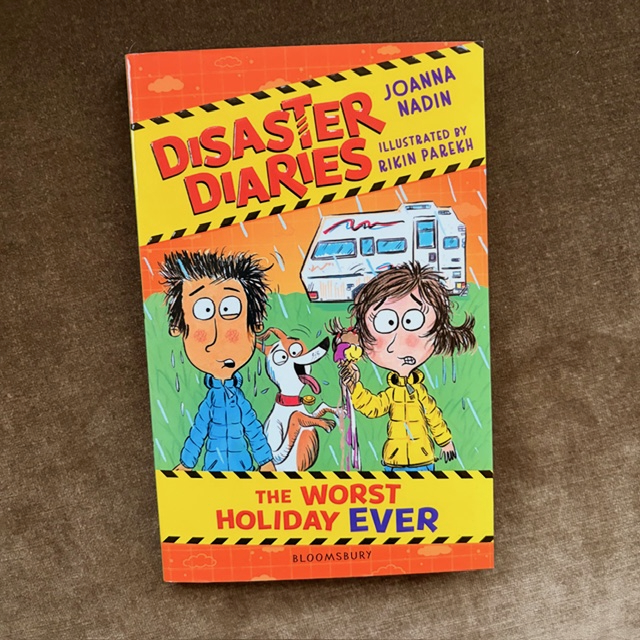
More Worst Class and this time it’s TOTAL MAYHEM!

There are two more adventures for class 4b on their way. This time best friends Stanley and Manjit didn’t LITERALLY mean to get covered in newt pond water just before the Class Photo. And they really didn’t LITERALLY mean to cause TOTAL MAYHEM by trying to get fake teeth to the very best tooth fairy. These things just happened, even though they had FOOLPROOF plans to get away with it all.

You see, 4B may be the WORST CLASS IN THE WORLD. But you wouldn’t want to be anywhere else.

Highly illustrated by the brilliant Rikin Parekh and featuring two hilarious madcap adventures in one book, this series is just right for children ready for their first chapter books.

Preorder the book by clicking here

Praise for the Worst Class series

Deliciously silly, with hilarious catchphrases [this] is a great cheer-up book.‘ (The Guardian)

‘A raucous, fast-paced joy of a book [that] captures the chaos and excitement of primary school with touches of real heart.’ (Armadillo Magazine)

‘Packed with laugh-out-loud moments.’ (The Scotsman)

‘More fun than a barrel of monkeys! A hilarious and hapless cast who I hope to see a lot more of. Perfect for youngsters to read again and again.’  (Claire Barker)

‘HILARIOUS!’ (Pamela Butchart)

‘A modern Bash Street Kids, only with heaps more ha-ha, and a lot more heart, this is guaranteed to make you LOL in class. For a little book, it makes a big impression.’ (Snort)

  • Guardian ‘Book of the Month’
  • Scotsman ‘Best Book’ 2020
  • A Summer Reading Challenge 2020 pick
  • Winner of the KSC Book Award
  • Longlisted for the Alligator’s Mouth Award
  • Shortlisted for the Lollies 2023

Posted in creative writing, Fiction, middle grade, Reading | Leave a comment

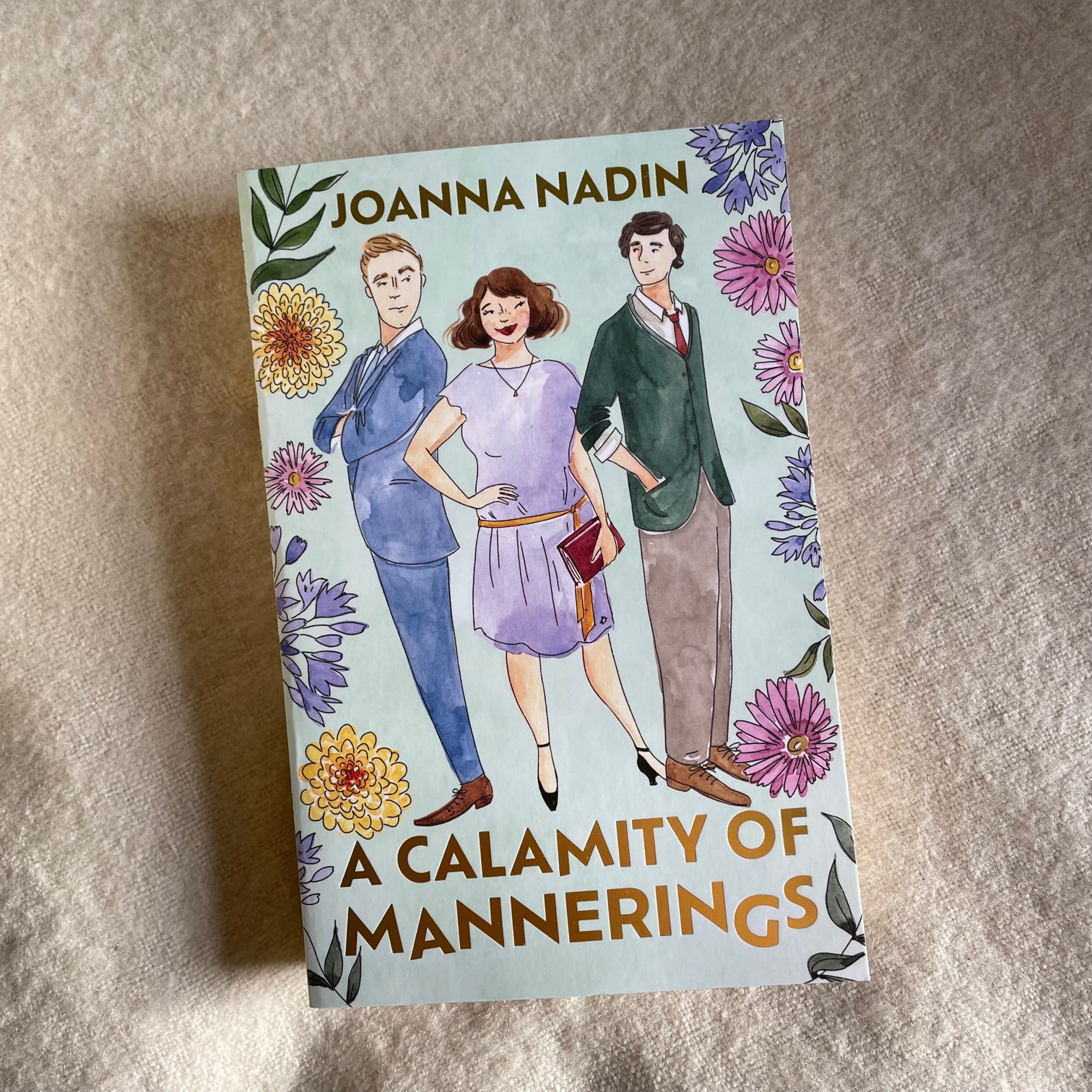
A Calamity of Mannerings heading your way

Take a peek into the diary of Panth (never enquire as to her given name), a young woman knocking on the gilded door of adult life and high society. But kicking up one’s heels at the Cafe de Paris does not come easy to a girl navigating:

  1. Poverty (even the genteel kind), thanks her papa’s sad demise
  2. A lack of any experience whatsoever with the opposite sex, of course not counting Freddie Spencer (and he wasn’t that sort of experience, anyhow)
  3. Multiple sisters with ideas, a grandmother with opinions and one recalcitrant sheep.

Panth knows there is more for her out in the world – it’s 1924, for goodness’ sake – and that could include swoonsome American with excellent teeth, Buck Buchanan. The question is, how in the name of Tatler is she to claim it?

Praise for the novel

A hilarious coming-of-age story for fans of I Capture the Castle and Bridgerton from Carnegie-nominated and Sunday Times No. 1 bestseller Joanna Nadin.

This book is bliss!‘ (Hilary McKay)

So much fun! So clever with such wonderful characters who I can still feel breathing and squabbling around me. I kept on guffawing with laughter.‘ (Natasha Farrant)

I couldn’t put it down. Wodehouse is alive and she’s beautiful!‘ (Emma Carroll)

Flawless. Fabulous. Austen meets Mitfords, Durrells and Bridgerton.‘ (Rachel Delahaye)

Publishing in May 2023. You can preorder the book by clicking here.

Posted in Fiction, love, Reading, romance, Teen, women's fiction, YA | Tagged , , , , , | Leave a comment

Come on, Carnegie!

We got pipped at the post for the Little Rebels Award, but hot on the heels of being shortlisted for the UKLA Prize and the Tower Hamlets Book Award, I’m beaming with pride to find out No Man’s Land has been nominated for the Carnegie Medal. This is a book that was born in the aftermath of the Brexit vote, and Trump’s rise in the US. As a former political adviser, I wanted to be back doing something to change the mess we were heading towards and found myself frustrated that I wasn’t in a position to do anything useful any more. But I’ve always been someone who truly believes words can and do change the world, and none more so than in children’s books, where we get to show readers who they might become, and how they might play a part in building a better tomorrow. And No Man’s Land tries to do just that – offering a sliver of hope in the darkness. This is my third nomination, and perhaps, like Joe All Alone and Everybody Hurts, it won’t get further, but I’ve always been happy to be the bridesmaid – it’s still an enormous honour, after all.

You can read the full list of nominations by clicking here.

Posted in Fiction, middle grade, Uncategorized | Tagged , , , , | Leave a comment

The Double Life of Daisy Hemmings (and other film stars)

All writers hope for film or TV deal. If any of us say we don’t, we’re lying. Aside from the (often actually quite small) financial boost, it’s a massive pat on the back, and a kick to see characters you’ve imagined made flesh and blood. Even if they’re not the ones we’d slated for the parts during those idle times when we assemble our ideal cast, along with our Desert Island Discs and Oscar-win speech. But a few of us (it can’t just be me) start the casting process a lot earlier. With no imagined prize in sight, and before a word of the novel is even written. For me, I need my characters made flesh and blood so that I can write them into being, which is why casting a novel is the first thing I do.

Sometimes it’s people I know. Occasionally it’s someone I see on the street. But most of the time, I fall back on A list actors, who I will have seen enough to know how they speak, move, inhabit a character, so that they can inhabit mine.

So in The Double Life of Daisy Hemmings, twins Daisy and Bea are played by I Capture the Castle era Romola Garai.

Jason (and his later incarnation James) is played by a fey, teenage Ben Wishaw, while his nemesis, the arrogant Hal is a swaggering Dominic West. All three of these actors have appeared in my novels before, and will doubtless appear again. Along with Anna Friel, Sean Bean, Will Poulter and Millie Bobby Brown. So even if the film of the book never gets made, I’ve already watched it played out in my head countless times, to rapturous applause (albeit only mine).

The Double Life of Daisy Hemmings is out in hardback, Audible and eBook today. You can order it by clicking here.

Posted in 1980s, Blog, creative writing, Fiction, love, romance, women's fiction | Tagged , , , , , | 1 Comment

Time to get Radical

No Man’s Land was born in the aftermath of the Brexit vote, and Trump’s rise in the US. As a former political adviser, I wanted to be back doing something to change the mess we were heading towards and found myself frustrated that I wasn’t in a position to do anything useful any more. But I’ve always been someone who truly believes words can and do change the world, and none more so than in children’s books, where we get to show readers who they might become, and how they might play a part in building a better tomorrow. So I’m hugely proud to have been shortlisted for the Little Rebels Award, which recognises ‘radical’ writing trying to do just that. I’m also honoured because it’s run by Housman’s Bookshop, where I spent swathes of time in my late teens and early twenties, fired with indignation at the right-wing government we were living under back then. A world that we’re sadly slipping back towards again today. But all the books shortlisted offer a strong viewpoint, and above all, hope that change is coming.

You can buy the book by clicking here.

And you can find out more about the award and the other books shortlisted by clicking here.

Posted in middle grade, Uncategorized | Tagged , | Leave a comment

World Book Day is going to be LITERALLY brilliant!

Last February, I had the kind of email a writer dreams of; the kind that comes from their lovely editor and begins with ‘CONFIDENTIAL’ in shouty capitals. It was telling me that Rikin and I had been chosen to be two of the World Book Day authors and illustrators with our Worst Class series. There was much SHRIEKING (from me) and a lot of ‘OMG, FAM!’ (from Rikin) and then there was what felt like eleventy billion weeks of very hard work as we came up with a brand-new plot, wrote it, and got the pictures done in time for today’s announcement of the full line-up.

I’m madly excited to be published alongside Michael Morpurgo, Simon Farnaby, Nadia Shireen and all the other wonderful writers and illustrators. There are fact books, and scary books, and books about getting stuck up a tree with a sausage superglued to your head (yeah, that one’s mine). But here’s the thing: World Book Day isn’t so much about the authors and illustrators, it’s about the readers, and how books can change their day – make it brighter, funnier – or even transform their lives.

Reading for pleasure is the single biggest predictor of a child’s future success, bigger even than how much money their mum or dad makes, or their parents’ educational background.

Reading develops empathy – when we read we get to walk a mile in someone else’s shoes and feel how they feel, helping us understand what our friends, and even our enemies, might be going through.

More than anything, reading offers up new lives for size, showing children what kind of person they might decide to be, and what kind of world is possible, if they choose to work at it. I hope the Worst Class in the World in Danger does that a little. Maybe not with the superglued sausage (don’t try that at home, kids) but the fortitude with which the kids meet their failures, and the joy they take in their triumphs.

Whichever book you choose with your £1 token, I hope it cheers you. It will certainly help change lives for others as 24,000 books will be sent free to prisons, and for one in seven children, this book will be the first they ever actually own. I’m proud to be among the authors giving children such an incredible gift. I know Rikin is too.

Posted in Blog, creative writing, Events, Fiction, middle grade, Reading, Uncategorized | Tagged , , , , , , , , , | Leave a comment

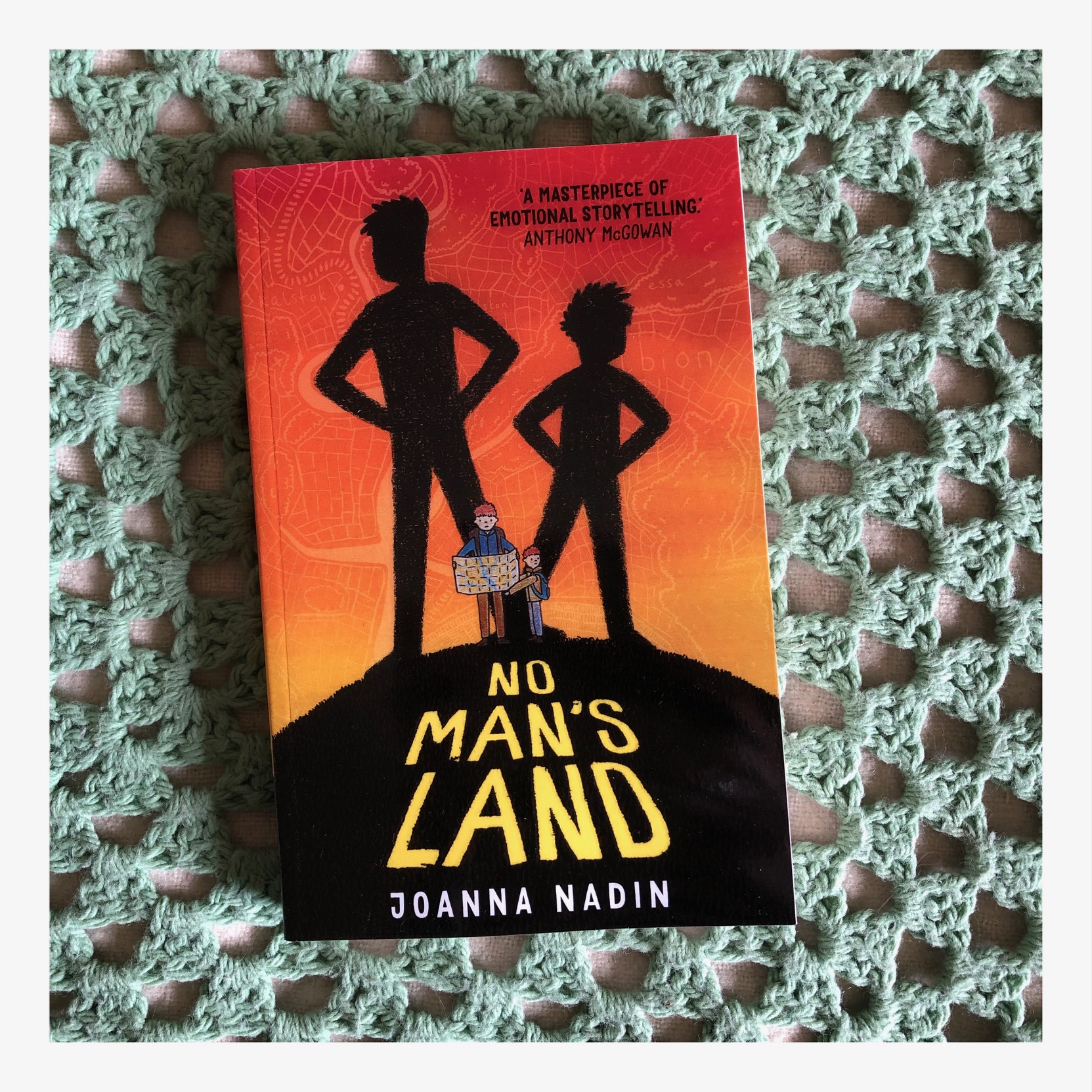
An adventure in No Man’s Land

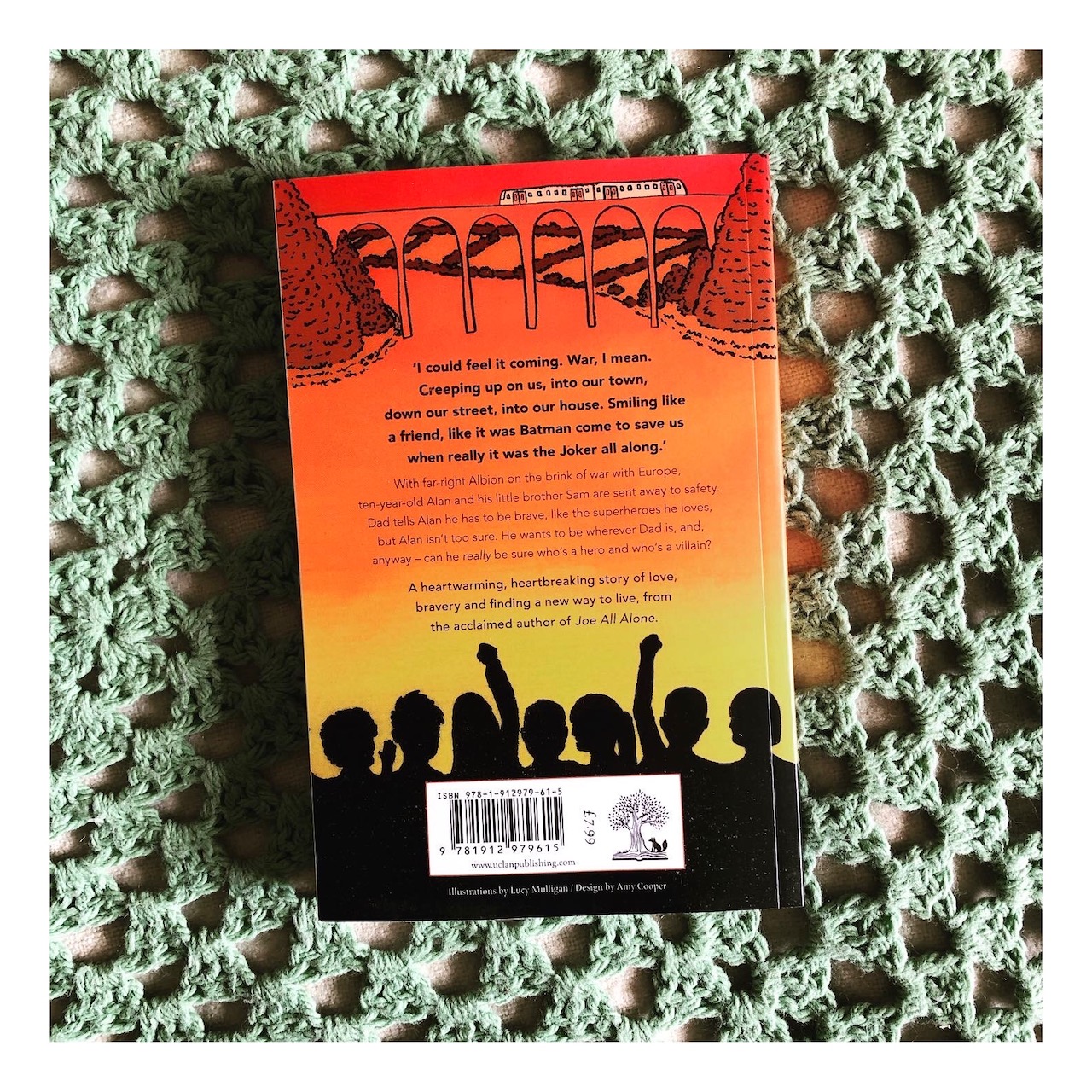
‘I could feel it coming. War, I mean. Creeping up on us, into our town, down our street, into our house. Smiling like a friend, like it was Batman come to save us when really it was the joker all along.’

I’d aways sworn I would never write about a dystopia. This world, right now, I insisted, was difficult and interesting enough. But then came Brexit, and Donald Trump, and I had a terrible sense of where the world might be heading – far, far to the right. I also felt impotent. Unable, now I no longer worked in politics, to do anything about the state of society.

But I did have some little power. I had words. Words can and have changed the world, I reasoned. And so, in a state of mainly anger, I wrote the first few pages of what would become this book, and read them aloud at a summer workshop where I taught at Bath Spa. The reaction from the audience was so strong – there were a lot of tears, and I know writers are emotional animals but this level was new even to me – I knew I had to finish it.

And here it is.

With far right Albion on the brink of war with Europe, ten-year-old Alan and his little brother Sam are sent away to safety. Dad tells Alan he has to be brave, like the superheroes he loves, but Alan isn’t sure. He wants to be wherever Dad is, and, anyway – can he really be sure who’s a hero and who’s a villain?

Book cover featuring two small books lost on a hill. Their shadows behind them are in superhero stance.

I hope I’ve done justice to the glory of Cornwall and the Tamar valley where my father grew up. I hope I’ve said something worth saying. And I hope, above all, that I’ve shown you some hope. Because that’s the real power of words, I think – offering hope, in a new way to live.

Joanna Nadin is a phenomenal writer, able to move in a shimmering flicker from the intellectually dazzling to the profoundly moving. No Man’s Land is as wise at it is gripping, with deep and profound resonances. A little masterpiece of emotional storytelling. (Carnegie Medal Winner Anthony McGowan)

Wonderful characters, convincing voice, gripping story – beautifully done. (Julia Green, author of The Children of Swallow Fell)

It’s terrific… well conceived and beautifully written. Real characters in an almost real world. (Fleur Hitchcock, author of Shrunk.)

Every young person should read it. It’s not only a page-turning thriller but a prescient – a necessary – story of our times. (Catherine Bruton, author of Following Frankenstein.)

Buy the book here.

Posted in Uncategorized | Tagged , , , , , , | Leave a comment