
This article originally appeared on Culturefly
I was diagnosed as autistic in the autumn of 2024, a few years after my daughter’s diagnosis with ADHD and the GP’s suggested pursuit of an ASD diagnosis in its wake. I was 54 by this point. How had I not known? Looking back, the evidence is everywhere: in my nursery school reports that worried I would not take off my anorak (well, it was my favourite thing in the world) and sat alone in the Wendy House for hours upon end; in the school reports that complained I spent too much time ‘correcting’ other children; in my own mother’s declaration that I was a ‘strange’ child and ‘difficult to live with’. In my own long list of things I find difficult (actually impossible) to live with: hats, stray hairs, the colour teal, any other human bar my child. But perhaps one of the clearest revelations was rereading my own novels and reassessing those protagonists (or their friends or sisters) who are decidedly different, entirely based on me, and so very clearly autistic.
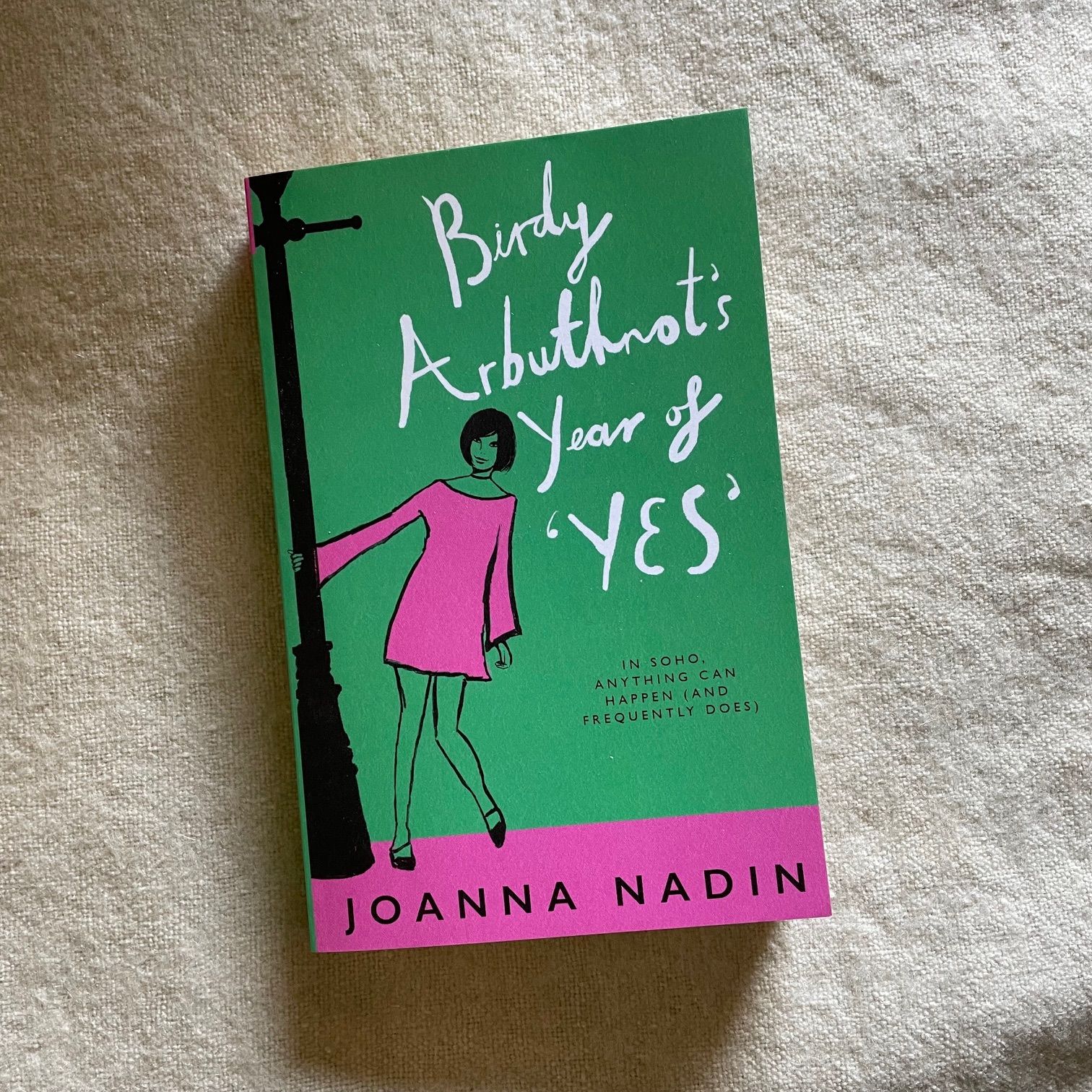
There is Rachel Riley who, through seven ‘diaries’ displayed every obsession I had as an adolescent, along with my literal interpretations of everything and inability to ‘fit in’. There is Jean in The Talk of Pram Town, with her rituals and rules. And, most recently, there are the Mannering sisters from A Calamity of Mannerings and Birdy Arbuthnot’s Year of Yes: cool-headed Aster, with her dislike of parties and people in general; constantly wrong-footed Panther who misreads people and fails to impress as a debutante; Marigold who collects facts about animals as well as the animals themselves. There is Birdy too, whose tangential mind is off on flights of fancy every second page, along with her rule-bound and anxious mother. These girls and women are all autistic and/or have ADHD, albeit coded and albeit accidentally.
I have questioned whether or not I might rewrite any of them, giving them an actual diagnosis, stated on the page, but the answer is always ‘unlikely’. Aside from time (and printing costs), the issue for me is that, historically, even as recently as the mid-2000s of Rachel’s adolescence and certainly in the early twentieth century of the Mannering sisters, they would not have been diagnosed. Even now, despite the acknowledgement that neurodivergence presents differently in women and girls than it does in men and boys, we are so very far behind, but in 1924? 1960? Not a chance.
Have no doubt, though, they – we – existed. In history and on the page. Rereading Austen I’m struck by the potential diagnoses one might make of the Bennet sisters. A favourite game with autistic writer friends is ‘spot the neurospicy protagonist’ when we reread old novels, or even recent ones. My greatest delight, though, is writing a third Mannerings novel knowing that I am writing an actually autistic main character (Marigold) and feeling free to make that obvious. I am free, now, to give her all my traits, and free too to have her ignore any pressure to ‘change’ or ‘be more normal’. A liberty I can only wish for, for the awkward, ill-fitting seventeen-year-old me.
You can order a copy of Birdy Arbuthnot’s Year of Yes by clicking here.

 Joanna Nadin
In high school, I worked on some short stories with an obviously autobiographical character. In retrospect, some of the most important to me aspects of the character were the sensory overload in the city, strict adherence to routines, the not understanding social rules, and the being an outcast for being different. It’s embarrassing no one pointed out that the character was obviously autistic.