
 *coughs in attention-seeking manner* So, as I shall be spending World Book Day editing the least-book-related document you could imagine, I thought I’d get a book out instead. Officially on shelves tomorrow, The Time of My Life is the last ever Rachel Riley and a goodbye to Saffron Walden. Which is sad both fictionally and factually for me. But there is pyromania, a cat called Nietzsche, and James and Mad Harry’s love triangle. And Hull. And Thin Kylie’s wedding. And snogging. And maybe even doing “it”. And blog tour kicks off today over on Rebecca Books, with me discussing the time Jack Straw caught me jeteing down a corridor to a Meat Loaf song. You can read all about it here
(Almost) The Time of My Life
Posted in Blog, Reading, Teen
Tagged My So-Called Life, Rachel Riley, Saffron Walden, Time of My Life
1 Comment
Wonderland
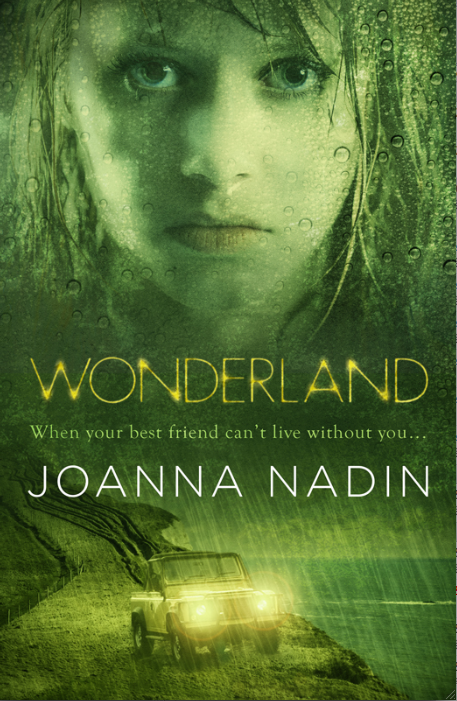 Wonderland was the first time I properly tried to unravel the idea of identity – what makes us who we are, and if it’s possible to change, a theme that ran through my teen years and much of my adulthood (I’m now studying it at PhD level), and one which permeates my writing. Influenced by 1980s film dialogue, by my summers in Cornwall as a child, and by my own desperation to act, to be someone else, it’s rereleased in September this year with a new cover.
“I wasn’t always like this. Diminished. A shadow. Once I was as bright as she was. People took notice, because she was with me. Stella.”
The arrival of Stella brings excitement and danger to Jude’s dull existence. For the first time, Jude can be who she wants to be. But as her life spirals out of control, Jude uncovers a terrifying truth about who Stella really is…
Extract:
Be yourself, they say. Be whoever you want to be. Dad, Ed, Mr Hughes, Oprah bloody Winfrey. Like some crappy mantra. But they’re not the same thing. Not the same thing at all.
I look at my reflection in the rearview mirror. My hair packet-bleached and salt dirty, my eyes ringed in black, lips stained red. My hands on the steering wheel, white, the nail varnish chipped, weeks old. Then I look at the Point falling away in front of us. The wooden fence, broken from where we’ve climbed over it so many times. The ledge below, cigarette-strewn and soaked in lager. And the sea below that. A swirling, monstrous, beautiful thing. Alive.
Nausea rises in me again, bubbling up, insistent. I breathe in, pushing it, willing it back down again. I don’t know how we got here. How I got here. I don’t mean how I got to this place, the Point, but how I became the girl in the mirror. I don’t recognize myself. What I look like. What I’m doing.
I used to know who I was. Jude. Named after a song in the hope I’d stand out and shine. But I didn’t. Jude the Invisible. Jude the Obscure. Everything about me unremarkable. Nothing beautiful or striking, to make people say, You know, the girl with that hair, or those eyes. I was just the girl from the farm. The one with no mum. I knew what would happen when I woke up, when I went to school, when I came home. Who would talk to me. Who wouldn’t.
Until Stella. Now when I look in the mirror I see someone else staring back. I can’t see where I stop and Stella begins.
“We’ll be legend,” I say.
I watch Stella as she lights up a cigarette and drops the Zippo on the dash.
“Like Thelma and Louise,” she drawls. She takes a drag then passes it to me. “But without the headscarves or Brad Pitt or the heart-of-gold cop watching us die.”
And then I know she knows. And I know she won’t stop me. Because this is the only way.
“It’ll be very,” she says.
I take a long drag on the cigarette and, still watching myself in the mirror, exhale slowly. Shouldn’t be smoking, I think. But what difference does it make now? I pass it back to Stella. Then I let the handbrake off and the car rolls forward.
Posted in Blog, Reading, Teen
Leave a comment
Undertow
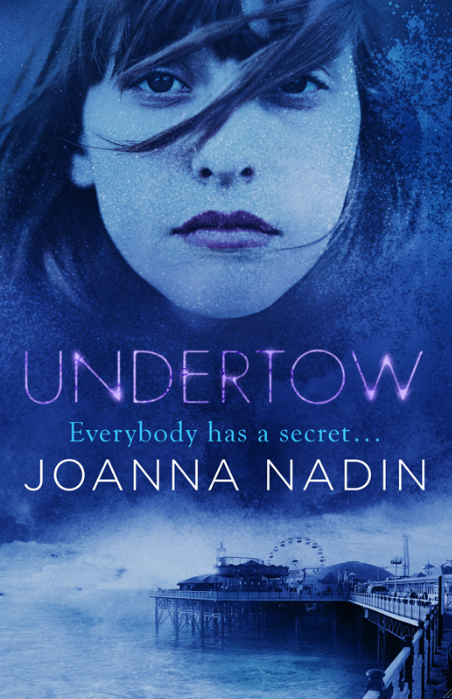 Undertow began on a blistering August day on the cliffs above Loe Bar in Cornwall, notorious for its riptides and dangerous currents. But as summer turned to bleak midwinter, and I watched a friend dragged down by the weight of depression, the book took a darker turn too. It was published a few years ago as Paradise, but it’s being rereleased today with its original title, and a new cover.
“We all have secrets… Monstrous things: skeletons locked in cupboards… Waiting to be found. Or to find us.”
Billie is desperate to find the father she’s never met. But moving back to her mother’s childhood home after Billie’s grandfather dies dredges up secrets – and Billie soon discovers that people may die, but the past lives forever. And some secrets are best left alone.
Extract:
We all have secrets.
Like not liking your best friend that much. But you don’t dare tell her because she holds reputations in her hand like eggshell, and if she moves just a finger you’re broken, over.
Like keeping your mouth closed when you swig your Bacardi Breezer so she thinks you’re as drunk as she is. But when she’s not looking you pour half the bottle behind the wall.
The usual stuff.
Even my little brother has secrets. Like he thinks no one knows it was him who drew the solar system on the kitchen ceiling. I knew. But I said nothing. Because those kinds of secrets don’t matter. Not really. They’re fleeting, like insects, mayflies. Alive for just a day.
But some secrets aren’t mayflies. They’re monstrous things: skeletons locked in cupboards; notes slipped through the cracks in floorboards and between the pages of books. And, though the ink fades and the paper foxes, the words are still there. Waiting to be found. Or to find us.
If I had known who he was – who I was – would it have changed anything? Or would I still have felt that weight on my chest, pushing the air out of my lungs so that, when I saw him, even that first time, I struggled to catch my breath? Would I still have lost hours, nights, thinking about his lips, his slow, lazy smile? And would I still have fallen in love, if I had known?
Maybe. Maybe not. But that’s it: I didn’t know. Because it was Mum’s secret. Het’s secret. And, like all skeletons, it came out of the closet. And it found me.
The key arrived three days after Luka left. Mum said it was serendipity. I didn’t believe in that kind of stuff, just thought it was a nice word, like egg, or pink. Back then, anyway. But maybe it was serendipity, fate, whatever, because Mum was already kind of losing it. Not big-men-in-white-coats style. Not that time. Just the little things. Like I found her in the kitchen with one of his T-shirts, just standing there, sniffing it. And when I called her Mother as a joke she slammed a glass of Coke down so hard it shattered; shards of transparency scattering across the floor, a slop of soda soaking into a dishcloth.
It wasn’t like he was gone for ever – Luka, I mean. He was in Germany with some band for three months – guitarist for a kid half his age and twice his talent, he said. But that wasn’t true and he knew it. Luka was good. Which was why he was always getting gigs. Always leaving. He always came back, though. But that wasn’t enough for Mum. She said she was tired of it, tired of waiting. She said if he went this time then we might not be here when he knocked on the door come Easter. Luka laughed and said he wouldn’t knock; he had a key. He kissed the top of her head and wiped her angry tears with his string-hardened fingers. But she pushed him away and said this time she meant it.
None of us believed her. I mean, he’s Finn’s dad. She couldn’t just disappear, hide. But then the envelope arrived and everything changed.
Posted in Reading, Teen, Uncategorized
Tagged Cornwall, du Maurier, Eden, Joanna Nadin, Paradise, Undertow
3 Comments
Eden
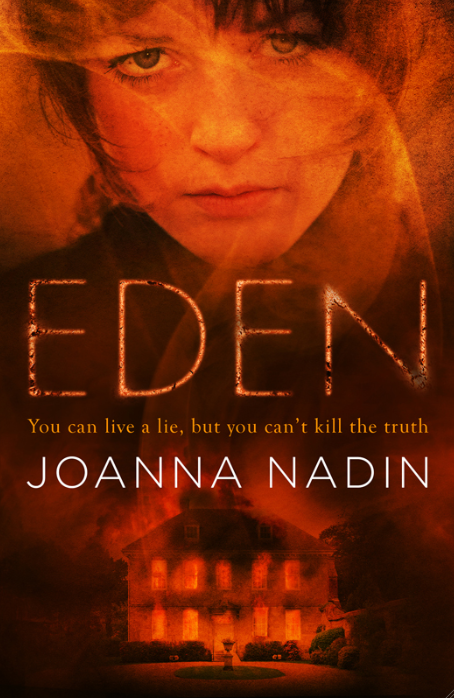 Mostly I write funny. It comes easy to me – making people laugh has always seemed to make up for any lack of appropriate clothing, political knowledge, or ability on the hockey field. But I don’t always read funny or think funny. And every so often the darker, stranger, and more dangerous thoughts push up like butterflies from inside, and take the form of a book. This time it’s in the shape of Eden, which is a love letter to Cornwall, to 1988, to the Smiths, to New Cross and Manchester back streets, to Daphne du Maurier, and to turning 18 that long, hot summer. It’s published in July by Walker, but they’ve released the cover and an extract (and new covers for Wonderland and Paradise, which I’ll post over the next few days). So here they are. I hope you like them, as these, of all the things I’ve written, are a big fat piece of me and what I felt like at eighteen, and what I wanted to be, and knew I wasn’t.
Eden by Joanna Nadin
“I wait for my heart to slow and then I begin the game of “what ifs” and “if onlys”. What if I could turn back time? Would Eden still stand? Would Bea still be alive?”
After Evie’s cousin Bea is killed in a house fire, she returns to her childhood home of Eden, full of guilt for what might have been. She is not the only one seeking redemption. Bea’s boyfriend, Penn, arrives in Cornwall, desperate to atone for a terrible mistake. And as Penn and Evie’s feelings for each other intensify, Evie slowly unravels the dark truth behind Bea’s tragic death…
Extract:
I still dream of Eden. Not the burnt, broken shell it is now, nor even the sweating, stifling coffin it became that last summer, when it was shrouded in dust sheets, awaiting burial like a corpse. No, the Eden in my mind is the one from my childhood when my entire world was contained within its cool, granite walls and high hedges, and my imagination played out on its velvet lawns and in the creeping dampness of the woods.
The slightest, strangest thing will open up a chink in my veneer: the curve in a flock-papered wall; the plastic taint of squash from a child’s beaker; a nettle sting on a grazed knee. And then through this crack the memories swarm; teeming from unfathomed depths into my conscious, like the swift surge of ants across a careless drip of jam. I remember the faded roses on the drawing room carpet under my always-bare feet; bright rhomboids of light from the leaded windows that cast their own tessellation on the black and white check of the hallway tiles; the sound of Bea’s breath, the comfort of its steady rise and fall as she lay in the narrow wooden bed next to mine. Then, these clear-as-yesterday sensations are joined by other fleeting glimpses in time: thirteen-year-old Bea reading, stretched across a princess bed in a turret, locked away from our world and immersed in another; sixteen-year-old Bea holding court in the back room of a smoky pub, its carpet sticky with spilt lager and Coke and patterned with the fallen ash from her cigarettes; almost-adult Bea’s laughter spilling out through the trees like bright butterflies as sweet-sixteen-year-old me runs down the path to the boathouse to meet her. An unceasing parade of Kodak moments surround me; a swirling dustbowl of memory that lifts me up and sends me soaring. Like Icarus seeking the sun, I fly so high that the trees become the odd, spongy miniatures from a toy train set, the house a shrunken version of itself rendered in painted plastic, and the creek a sliver of foil stuck down with a brush and glue.
Then I see them: Bea and a boy; my boy – Tom – or one I want for my own. Their brown-limbed bodies are close, too close; their fingers touching; now, their lips; a hot hand on a sand-spackled back; a sound, his, of pleasure; then my own, of disgust. Bea could have had anyone. So why him? Why Tom? And I begin to fall; a giddy, stomach-swirling tumble down towards the water; a fall I cannot possibly survive. I hit the surface, and my breath is knocked from my body, but I don’t sink. Instead I’m thrown, gasping, onto the shore of the “now” me: the writer, her fingers poised mid-sentence above a keyboard; the mother kneeling at the refrigerator door, milk carton in hand; the wife wrapped around the familiar curve of her husband’s spine in a bedroom twenty-something years and two hundred and more miles away from Eden.
I wait for my heart to slow and my breathing to even out into a tick-tock rhythm, like a clock counting out a life in hours and minutes. And then I begin the game. Not an I-spy or a who-am-I or any of the charades that Bea and I would conjure up and convolute to fill a rainy afternoon or dark winter morning, but a darker game, filled with the danger and deliciousness of truth or dare. It is a game of “what ifs” and “if onlys”. If I could turn back time; if I could have been different – looked different; if I had said this and not said that. Would there have been a different ending? Would Eden still stand? Would Bea still be alive?
But the game is pointless. For I can’t change what has been. Only what I take from it. Besides, paradise is not lost in a single day. Eden didn’t fall in the furnace of that afternoon, nor because of the match struck a year before by a single kiss. A kiss that at the time meant everything, meant the world – or at least the end of mine – but which I know now was worth less than nothing. The truth is that decay had crept in long ago, though I, rose-tinted, and blinded by hope didn’t see the flames already crackling beneath my feet. A tinder set for every loss, every argument between me and Bea, every “wish you weren’t here”; kindling stacked on high over months and years, until Eden’s very foundations were a dessicated, precarious heap, waiting for a single Lucifer to be dropped.
Posted in Blog, Teen, Uncategorized
Tagged 1988, Cornwall, Daphne du Maurier, Eden, Fowey, Goldsmiths, the Smiths
Leave a comment
And Then I Kissed Him…
As I try to blaze a trail but, more often, wander slightly baffled and damp-squib-like through life, I leave behind me an oddly-shaped wake of skills tried but not mastered: the guitar aged 11 (I wanted to be Joni Mitchell), show jumping aged 13 (anyone from a Pullein-Thompson sisters’ book), ice skating aged old-enough-to-know-better (and I am decidedly no Jayne Torvill). Mostly I got bored, or forgot to practise, or had a shonky knee, which meant I was never going to master a double axel (it is definitely the knee, not the lack of talent). But there is one skill I have neither tired of, nor missed a chance to work on. And, luckily, it is entirely unaffected by my knees, unless they go especially weak.
That skill is kissing.
So here, in no particular order, are three things I have learned about a good snog.
- The first ever time is NOT like it is in books. It will NOT necessarily be with Prince or Princess Charming. In my case, it was at a school disco with a boy whose greatest devotion in life was to the farm club pigs. Needless to say the earth did NOT move, though I did worry my two bags of Wotsits and four bottles of Panda Pop might make a reappearance at any minute.
- It can’t be taught, but it can be perfected. Like guitar, or show jumping or ice skating, good kissing comes with practice. And though you may need to find a few frogs, it’s a lot more fun than grade 8 violin. Plus…
- The person you least expect might turn out to be the Prince or Princess after all. Or at least, some kind of wonderful. The first kiss that really, I mean REALLY made me do the Mia Thermopolis foot pop was with a boy who had been an enemy, then a friend. But certainly not someone I’d ever cast in the leading man role. He was the sidekick, the best buddy, the Buttons character. He was not meant to be my matinee idol. Only, late one night, after walking me, my bicycle and half an apple crumble home, under a fire escape at the back of a kebab shop on Beverley Road, he kissed me, and then I got it. I knew that that was what I’d been waiting for.
And this is kind of the point. You don’t need the violins or the sunset or the balcony. You don’t even need Brad Pitt, but more of a Michael Moscowitz. Like Charlie says:
It was a movie kiss.
It was Leonardo di Caprio and Clare Danes in armour and angel wings on the balcony in Romeo and Juliet. It was Burt Lancaster and Deborah Kerr on a black and white beach from here to eternity. It was Rhett and Scarlet, Holly Golightly and Paul, Jack and Rose.
It was me and him on the front step, on a rainy night in Nowheretown.
But that’s what made it perfect.
(‘The Movie Kiss’ in And Then He Kissed Me, 99p at the iBookstore until January 6th)
Boys. And books. And boys in books.
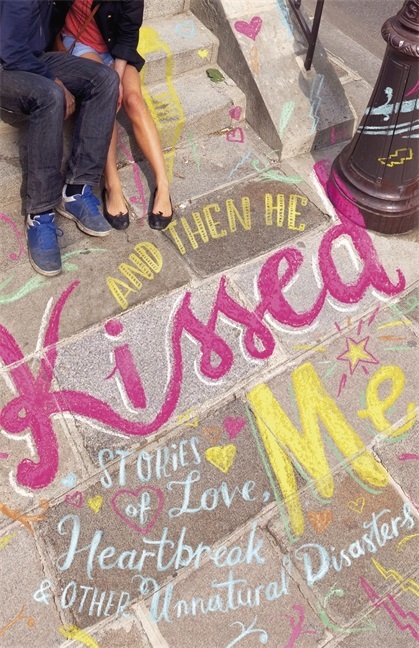 Like my alter ego Rachel in My (not so) Simple Life, as a teenager I fell in love frequently, swiftly and with absolute conviction. Unlike Rachel, I never had to swear off boys and their complications and contradictions, or rather never had the chance to, because, like the unnamed narrator in “The Movie Kiss” in And Then He Kissed Me my paramours were mostly of the fictional type.
My first love was Pennington. I still remember him in stark detail. The way his hair curled over his collar, defying school rules, and endless and pointless detentions from masters. His hands stuck stubbornly, sulkily in his pockets. Then the way they would come to life at the piano, dancing up and down the ivory as he practised the Liszt.

Pennington’s Seventeenth Summer
He was seventeen. And I was younger: fourteen – too young, really. But old enough to know that this was true love. That I was the only person who understood him; his moods, his genius. Ruth claimed to. But I knew deep down she wasn’t the one. I was.
If only he could see that. If only he could see me. If only he were, well, real.
But then again, if he had been, would he have been as perfect? If he’d been on the bus to Peterborough Ice Disco, would he have sat next to me? Or would he have fallen for Karen: captain of the netball team, and owner of not one but three ra-ra skirts.
I’ll never forget him. The way he made me (and hundreds more) feel. The way I still feel when I flick through the pages of KM Peyton’s ‘Beethoven Medal’. But of course love is fickle. And in the Autumn I met John in a cinema in Cambridge. Another broken, difficult boy. He was on-screen of course, in “The Breakfast Club”. But that didn’t diminish my adoration.
 And now I’ve moved on to the real thing. It’s more complicated. But a whole world of better.
I still fall in love when I open a book though. And I’m still grateful to Peyton and Penn. They gave me my first crush. And a life-long love of musicians and artists and writers: disheveled, tortured souls, whom only I, of all the girls, could possibly understand.
My (not so) Simple Life (OUP) and And Then He Kissed Me (Walker – an anthology of YA romance) are both published today.
Posted in Blog, Reading, Teen, Uncategorized
Tagged Adele Parks, Cathy Kelly, Dyan Sheldon, first love, KM Peyton, Pennington, Rachel Riley, Sarah Webb, YA romance
2 Comments
The ten signs of ageing
In light of today’s tabloid coverage, and subsequent BBC Tees interview I thought I’d repost this….

Am in state of mild shock. Apparently there are now ten signs of ageing. TEN! I was just about coping when Oil of Ulay (along with a Neanderthal hairline and a tendency to gingerness, I have also inherited from parents a refusal to acknowledge any change in brand names, thus I still use Jif and hate Marathons) told me there were seven signs I needed to tackle immediately lest I be left on shelf like withered crone. But imagine my shock this morning when I flicked over to ITV only to be told by L’Oreal that I now need to panic about ten.
Ten? Really? And they don’t even give me helpful list like Ulay did, so started frantically working out what they might be. Thus:
- Lines (tick)
- Wrinkles (tick, though not sure how these differ from lines. Is like trying to tell a tangerine from a satsuma or any…
View original post 195 more words
Posted in Uncategorized
Leave a comment
Funny girl
 I have always “done” funny. Both as a reader, and a writer. As a child, I snorted through every page of every Dr Seuss, laughed until I cried at Russell Hoban’s inspired creation Aunt Fidget Wonkham-Strong in her iron hat cooking mutton sog, and the mere mention of the East Pagwell Canal from Professor Branestawm was enough to render me insensible.
Laughter is a tonic, it’s therapy. Quite literally, as there is no greater closure than the writer’s revenge of turning the adults who belittled you, or the children who taunted you mercilessly for having hair like Leo Sayer and second-hand skirts, into grim-faced moustachioed ladies, or moronic underachievers called Kylie (yes, both of them, and no I won’t name the inspirational bullies behind the characters, but suffice to say I didn’t bother to change one of the surnames).
A few months ago, I was asked by The Guardian to write a piece on my top ten favourite “funny” books for young children. Of course I said yes. a) Because my self-esteem is sufficiently low and my ego sufficiently enormous that I am easily flattered. b) Because I like going through my bookshelves and ensuring they are still in excellent alphabetical order. And c) because I like thinking about funny things.
And so I did, think about them I mean, not just the books themselves (though that was a delight), but about the concept of “funny” and its place in fiction. Because I’ve found that funny is, oddly, frowned upon by certain people, and certain schools of thinking. These are the people who would have you believe that “issues” books – books that make you “feel”, that make you “think” (usually about grim things) are somehow more worthy of your time, and of praise, and prizes, than ones with jokes in.
People like my old O Level teacher who told me I’d never amount to anything when he caught me reading one of my own books under the desk, instead of the syllabus text sat sullenly on top of it. It wasn’t so much the act of disobedience that riled him, I think, than the subject matter – my chosen book was George’s Marvelous Medicine – so much more interesting than the turgid (or so it seemed to me at the time) Silas Marner.
But what these people – and there are many, from teachers to parents to peers – fail to get is that funny books can be just as worthwhile, and just as potentially life-changing. They make you “think”, they make you “feel”. But they make you laugh while you’re doing it. And sometimes, that can make the drama all the greater, the truth all the starker.
Funny books are important – from getting reluctant readers engaged in a story, to keeping the attention of those with short attention spans, to simply making us feel clever when we get the joke. Shakespeare did it; Austen did it; Dahl did it, not just in his children’s books, but throughout his tales for grown-ups too.
I’m not claiming to be in their ball park, I’m not even claiming that the Meaning of Life is life-changing, but I am convinced that, for at least two hundred and something pages, it will make life fun. And that makes life good. And that, surely, is what it’s all about.
(And if you’re interested in just what my top ten funny books for 5-8s were, you can read about them here)
The Meaning of Life is out today, and you can get it from the Guardian bookshop.
Trapped wind (or is it a novel?)
![photo[8]](https://joannanadin.com/wp-content/uploads/2011/12/photo8.jpg) I hate it. I can see it in their cheap-Chardonnay-dilated eyes when I’m introduced at parties or pubs or political drinks things. “A writer, really? I’ve always thought I had a novel in me.”
I hate it. I can see it in their cheap-Chardonnay-dilated eyes when I’m introduced at parties or pubs or political drinks things. “A writer, really? I’ve always thought I had a novel in me.”
“Gosh I say, smiling. Well you should definitely do something with that.”
When what I am thinking is “You patronizing, presumptious, conceited *insert expletive of choice here*. No one “has a novel in them”. We all have ideas, yes even you, you bloat-brained, idling *second expletive”. But few people have the skill and dedication to turn those ideas into words and then, harder still, get those words out of their heads and on to paper. What makes you think you could do that? I don’t say, ‘Oh, I could have been a doctor if I had been arsed. I’ve definitely got a twenty-four-hour heart transplant in me, I’ll probably try it when I retire.’ Because I wouldn’t be so fecking rude.”
Or would I? I am oh so very tempted to take a leaf from the clever and actual writer Che Golden’s book next time and reply, “A novel? Really? Don’t you think it might just be trapped wind?”
Writer’s block (or not)
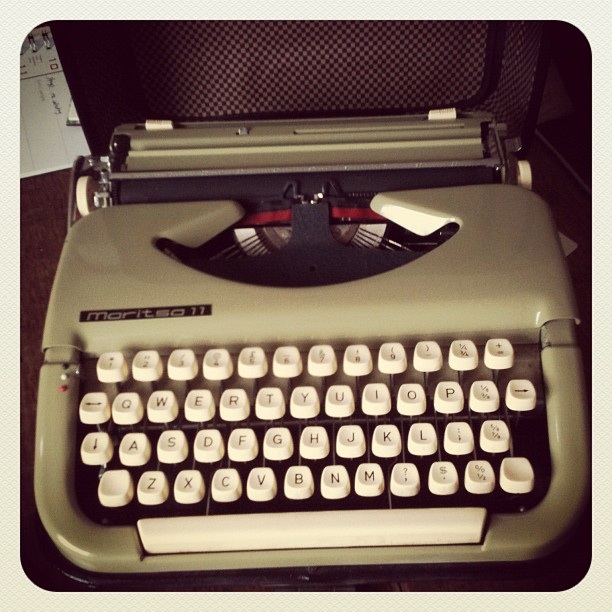 Amongst the questions I am most often asked by journalists and small children (along with “Do you like Eastenders, miss?” and “Can I be in a book, miss?” and once “Was you in Les Miserables, miss?”) is the million-dollar “What do you do when you get writer’s block?” To which I smile, and sigh, and say with a “sorry”: “I don’t.”
Maybe it’s because I’ve never had it. Like trying to give up smoking, how could I possibly understand something I’ve never had to go through? But that is kind of the point. I never smoked because I couldn’t afford to, financially, health-wise, or shout-wise (Mrs Nadin snr is forensic in her ability to sniff out a Benson & Hedges). Likewise I have never had writer’s block because I have never been able to afford to.
Writer’s block seems to be a luxury enjoyed or endured only by those who can spend months on end being bankrolled by their partners or parents. Try being a broadcast journalist, or a political writer – when someone asks you for a piece they don’t mean maybe in a few weeks if you can muster up the creative energy, they mean in half an hour.
So you write, even if you know it’s not Faulkner or Hemingway. Even if you know it’s not the best you’ve ever done. Even if you know that if you wrote the same thing tomorrow it might be actually good rather than good enough. That bit is what second drafts are for. And editors.
I write because I love it. I write because I don’t want to do anything else. But I also write because it’s a job, and you don’t not do your job just because you’re having an off day. At least, not if you have council tax to pay. Or a rather splendid sixties coat that is begging you to try it on every time you walk past the window.
I know that’s possibly not helpful. I know it’s a bit ranty and holier than thou. But if you will ask…
 Joanna Nadin