
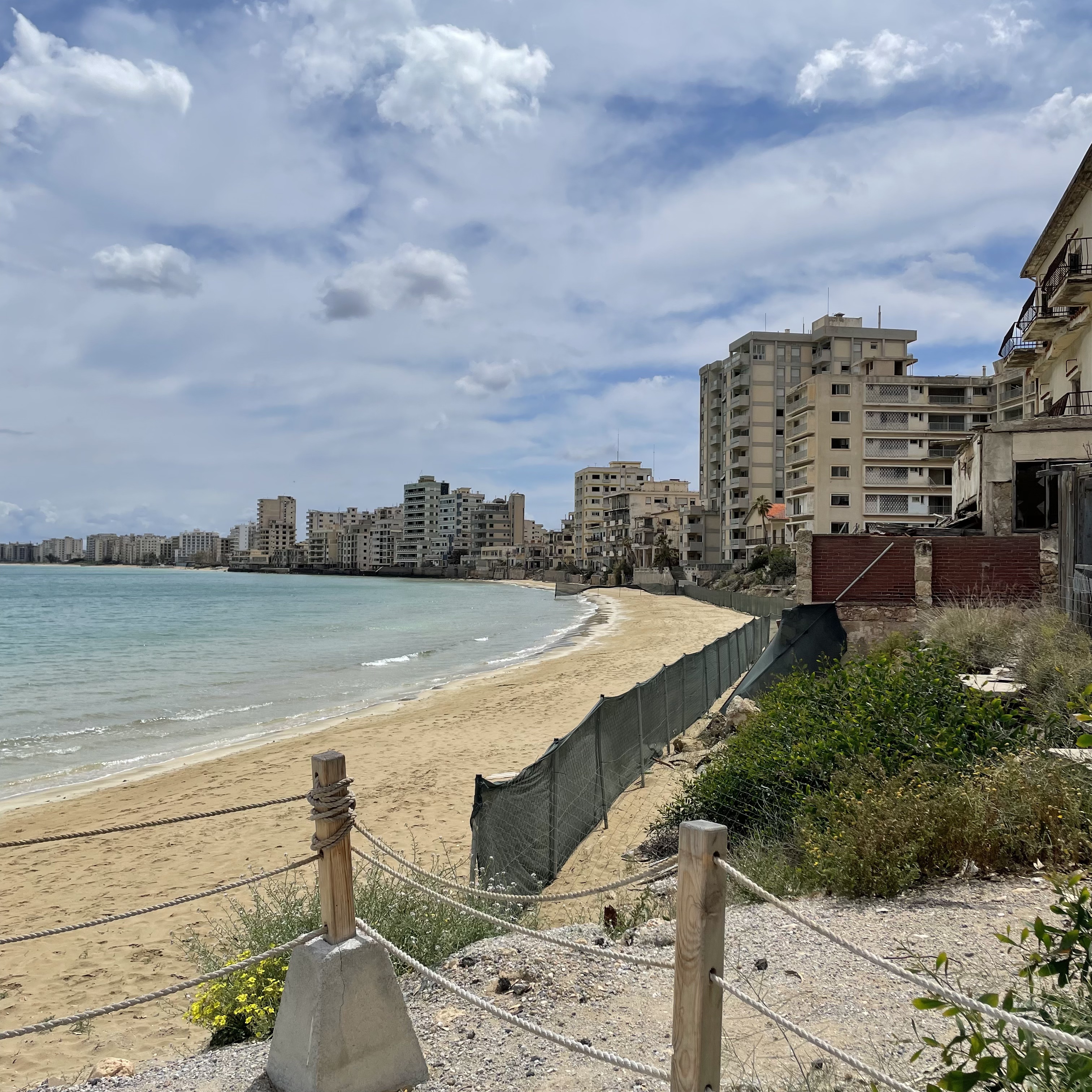
On the eastern edge of the island of Cyprus sits a string of built-up resort towns – Protaras, Paralimni, Ayia Napa – the latter famed for its night life that begins late afternoon and ends – if it ends – sometime around dawn. But a few miles to the north, if you bring the right paperwork, and can fathom the taxis that begin and end at the armed border crossing, you can venture into the jewel in Cyprus’s crown, or, at least the derelict shell of it.
Varosha, a southern suburb of Famagusta (‘varosha’ means ‘suburb’) was once a playground for the rich and famous: Elizabeth Taylor holidayed there; Abba were formed there. Postcards from the early 1970s show a technicolour expanse of yellow sand and hoards of holidaymakers in primary-bright bathing suits reclining on loungers in front of high-rise hotels. Many of them, undoubtedly, the wives of the myriad British ex-pats – military and civilian – who took up what was known then as the ‘sunshine posting’. Today, though, the resort is roped off and gated, its buildings crumbling, its shops long-looted. It resembles nothing more than a ghost town, or, more accurately, a war zone, which, effectively, it still is.
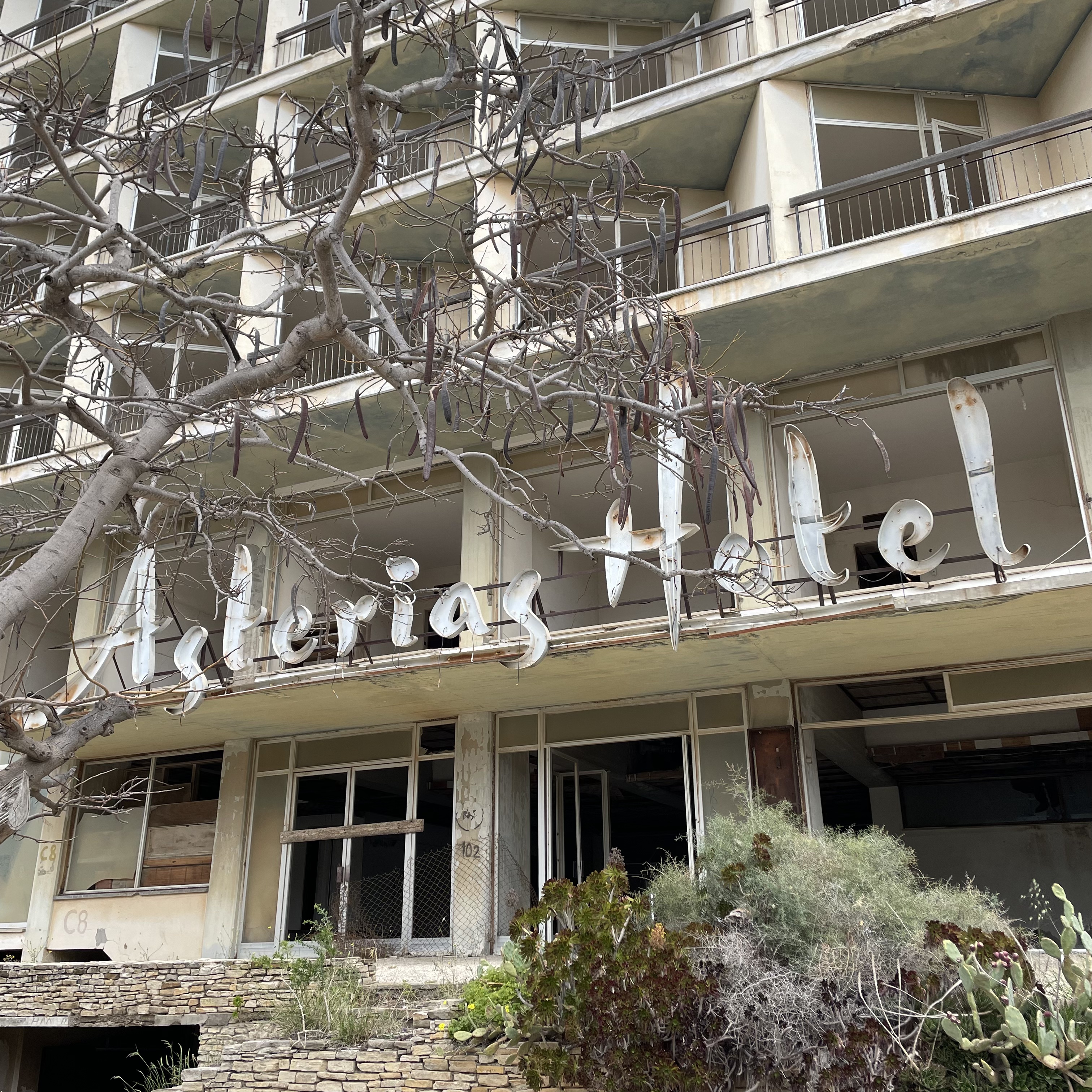
By 1974, Cyprus had already had a long history of conflict, with disputes over land rights long-running between Turkish- and Greek-Cypriot inhabitants, the occupying British only adding to the tension. This tension erupted that July when Greek mainland troops in collaboration with Cypriot supporters overthrew the president, and installed Nicos Sampson, who was pro ‘enosis’ – union of Cyprus with Greece. Turkey retaliated by invading the island, airdropping troops and bombing Varosha itself. Hundreds of lives were lost that summer, and thousands more people – Greek, Turkish and British – were displaced. The conflict lasted just weeks, but its aftereffects are still being felt today as the island was cut in two, split horizontally by a buffer or ‘green’ zone. In most places this border is a few metres wide, but to the east it expands to engulf the entirety of this once-flourishing suburb. For more than four decades it remained behind towering barbed-wire fences, inhabited only by rats, birds and the UN troops that patrolled it. Then, in 2020, a few streets were opened up for a few hours a day, allowing visitors to both mourn and gawp at what Varosha had become.

Until 2022, though, Varosha to me was merely the name of a friend – a friend whom, I assumed, had had hippy parents. It was only in August of that year she explained to me its origin – that her parents had lived there; she had been conceived there, and later, as a baby, evacuated just days before the bombs began to fall. A few weeks later, on my way to meet Varosha for coffee, in what felt like fate, I took a phone call from my publisher, who said she wanted to talk about the 1974 invasion of Cyprus, specifically Varosha – where her father had grown up – because she thought there was a YA novel in it.
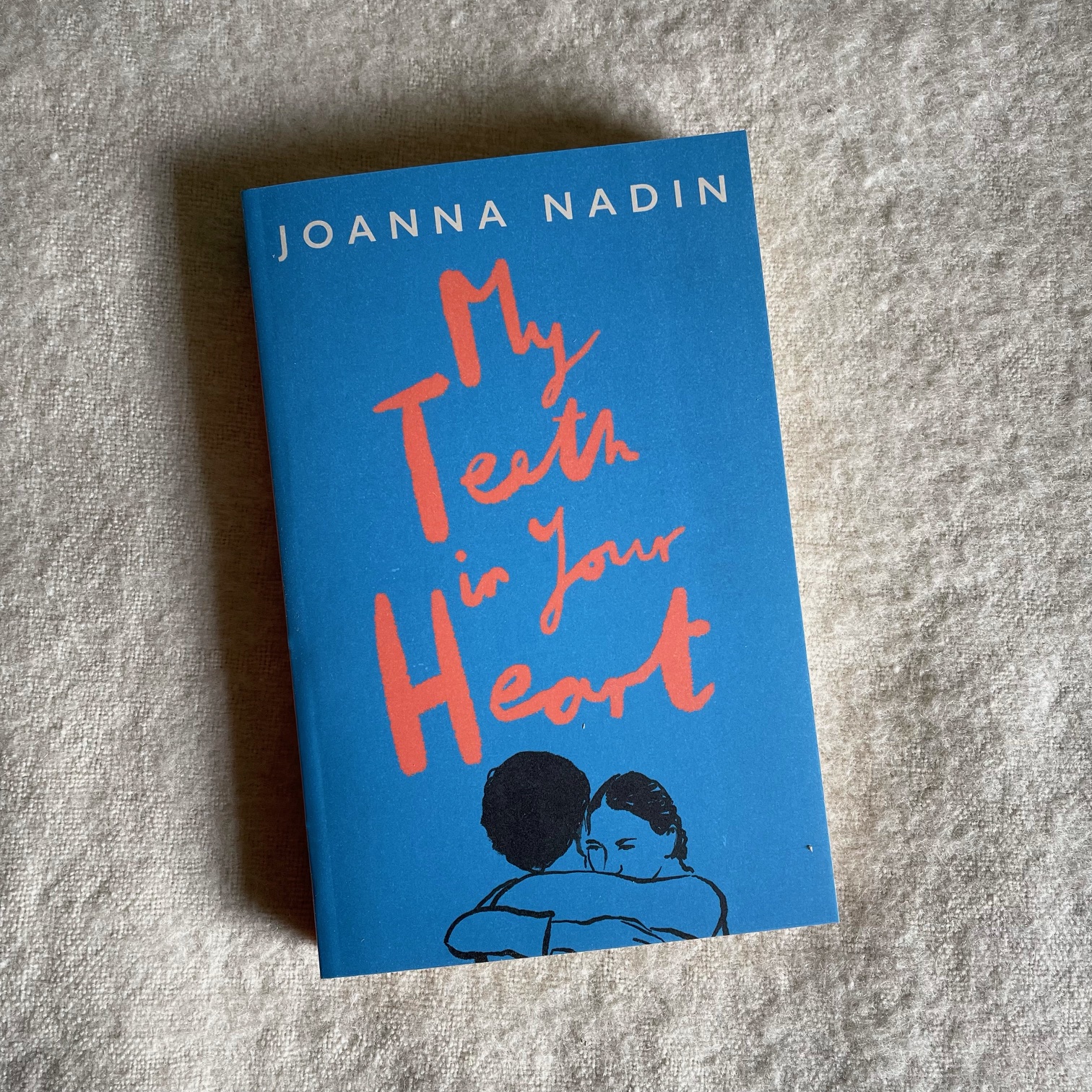
There was. My Teeth in Your Heart marks the 50th anniversary of the invasion, and follows two seventeen-year-old girls as they face and face up to conflict in Varosha: Anna, who falls in love with a Greek-Cypriot boy in a bookshop in 1974 and finds herself pregnant, and Billy, her granddaughter, who, upon Anna’s death in 2024 goes back to the island to trace her real grandfather and finds herself falling in love as well. It is my love letter to both Varoshas and, I hope, a small insight into the difficult history of that side of Cyprus.
Buy the book by clicking here.

 Joanna Nadin
Ordered! Went to Cyprus for the first time last year, adored it. Met up with relatives of one of my oldest friends who is half Greek-Cypriot, and walked along the border in Nicosia with them. I have also loved Elif Shafak’s The Island of Missing Trees and Nina Bawden’s Rebel on a Rock (which is not set in Cyprus but is reminiscent of the situation there in 1974, to my mind).